Sustainable remodeling in Maryland is less about labels and more about a set of practical choices made project by project: how well the house holds heat and cool air, how efficiently it lights and ventilates, how durable the materials are, how much water it uses, and how much waste the project creates. The aim is a home that performs well and lasts, without relying on promises about savings or certifications.
Many high-value homeowners ask about sustainability when they remodel, and the topic can quickly drift into vague claims. This guide keeps to decisions you can discuss with a design and construction team. It is not a ranking of green products, and it does not predict energy savings, since results vary by house, products, installation, and how a household lives. For a related look at efficiency, see our older article on building an efficient house for tomorrow.
Key Takeaways
- Start with the house as a system. Air leaks, insulation, windows, and mechanical equipment all affect one another.
- Durable materials and easy maintenance can matter as much as efficiency over a home’s life.
- Lighting, ventilation, and water-using fixtures are often straightforward places to make better choices.
- Incentives and programs change. Verify them with current official sources before relying on them.
- Avoid products or projects that promise results without evidence.
What Does Sustainable Remodeling Actually Mean?
There is no single definition. For most homeowners it means making decisions that reduce resource use, support comfort and health, and avoid replacing things sooner than necessary. In a remodel, that often comes down to choosing carefully within the scope you already plan to do, rather than adding unrelated work.
A good starting point is a conversation with your project team about your priorities. Are you focused on comfort, lower utility use, indoor air quality, durability, or reducing waste? Different goals lead to different choices.
How Do the Envelope and Windows Fit In?
The envelope is the part of the house that separates inside from outside: walls, roof, floors, windows, and doors. When windows or exterior work are already in scope, there may be a chance to improve how the house holds temperature. Gaps, thin insulation, and old windows can all contribute to drafts and uneven rooms.
Ask what is practical for your project. If you are considering window replacement, see our window replacement page for how that process works. When walls are open during a remodel, ask whether insulation and air sealing can be addressed, since that work is easier before finishes go in. Results depend on the existing house and the products and installation methods chosen.
What About Lighting and Ventilation?
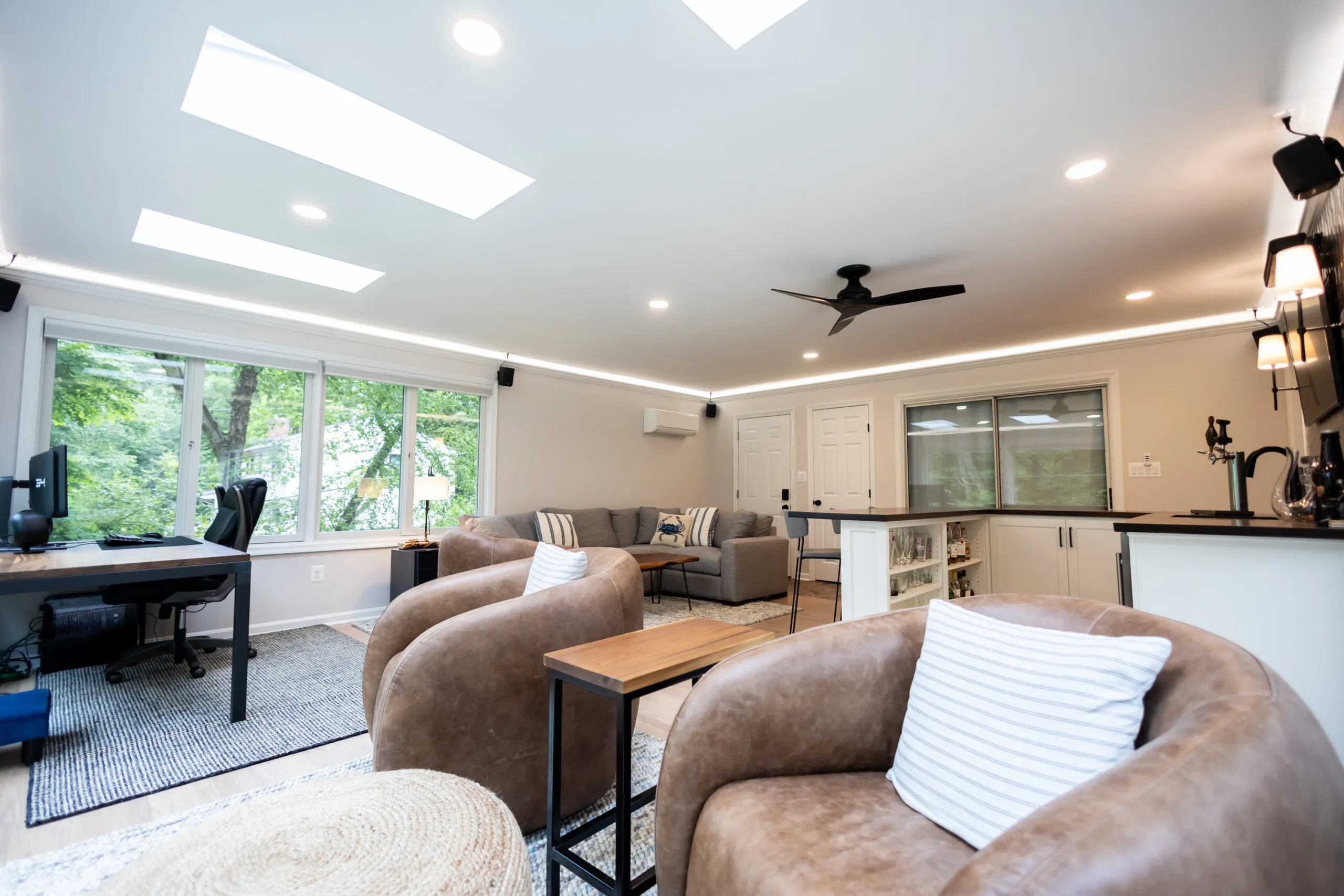
Lighting is often a simple place to start. Efficient fixtures and thoughtful controls, such as dimmers, timers, and sensors, can reduce wasted use. Planning for daylight, where the design allows, may also reduce the need for artificial light during the day.
Ventilation affects both comfort and indoor air quality. Kitchen and bathroom exhaust fans, for example, help remove moisture and cooking byproducts, and their performance depends on proper sizing, installation, and ducting. The EPA offers general information on indoor air quality. Ask your team how ventilation is handled in each space you are remodeling.
Which Materials Last Longer and Ask Less of You?
Durability is a quiet form of sustainability. A surface that holds up for years, can be cleaned without harsh products, and can be repaired instead of replaced may serve a household longer than a cheaper option that wears out.
Questions worth asking about materials:
- How long is this product expected to last under normal use?
- How is it maintained, and what does maintenance require over time?
- Can it be repaired, refinished, or reused?
- What does the manufacturer say about its composition and performance?
Rely on manufacturer information and recognized programs where available, and be cautious about vague terms such as eco-friendly or green without supporting detail.
How Can a Remodel Reduce Water Use and Waste?
Water-using fixtures, including faucets, showerheads, and toilets, come in a range of efficiency levels. The EPA’s WaterSense program labels products that meet its criteria, which can be one reference when choosing fixtures.
Waste is another consideration. Remodeling creates debris, and some materials may be saved, donated, or recycled depending on what is available locally. Ask your team how they handle demolition debris and whether salvage or recycling is an option for your project. Careful planning and accurate ordering can also reduce excess material.
What About Incentives and Programs?
Rebates, tax credits, and utility programs can change, and eligibility rules vary. We do not list specific programs here because details may be out of date. Check current information from official sources, such as the Maryland Energy Administration, ENERGY STAR, and the U.S. Department of Energy’s Energy Saver site. Confirm requirements before you purchase or start work.
How Should You Prioritize?
Not every choice carries equal weight, and budgets are finite. A helpful method is to sort decisions into three groups: those that are hard to change later, those that affect daily comfort, and those that are easy to upgrade over time.
Choices tied to walls, windows, and mechanical systems tend to be hardest to revisit once finishes are in. Comfort items, such as ventilation and lighting, affect how the home feels every day. Easy-to-change items, like many fixtures and appliances, can wait. Putting your attention on the first group while the house is open is often the most practical use of a remodel.
How Does This Look Room by Room?
Kitchen. Ventilation over the cooking surface, efficient lighting, durable counters and cabinets, and water-conscious fixtures are common discussion points. See kitchen remodeling in Maryland.
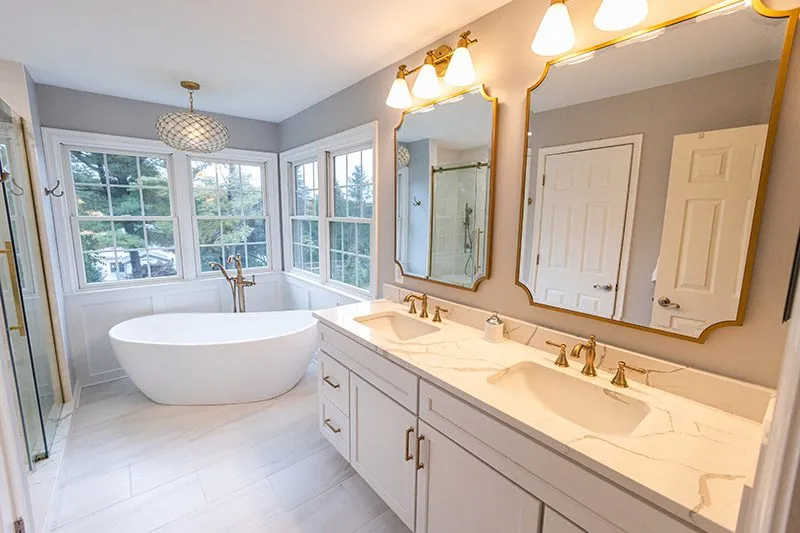
Bathroom. Exhaust fan sizing and ducting, moisture-resistant materials, efficient faucets and showerheads, and fixtures that last all deserve attention. See bathroom remodeling in Maryland.
Addition. A new addition is a chance to plan insulation, air sealing, windows, and mechanical systems together, which can be harder to do in an older space. See home additions in Maryland.
Each room involves tradeoffs between cost, appearance, and performance. A designer can help you weigh them for your own house.
Does a Home Energy Assessment Help?
Some homeowners start with an assessment of how their house uses energy. An assessment can point out where air leaks, insulation gaps, or equipment issues may be affecting comfort and use, and it can help you set priorities before design begins. Availability, cost, and providers vary, so check with the Maryland Energy Administration or your utility for current information. An assessment is a planning tool, not a guarantee of results.
Where Do Sustainable Choices Show Up in a Remodel?
| Area | Practical Choices to Discuss | Question to Ask |
|---|---|---|
| Envelope and windows | Air sealing, insulation, window selection where in scope | What is practical given the existing house? |
| Lighting | Efficient fixtures, controls, daylighting | Where can controls reduce waste? |
| Ventilation | Properly sized and ducted exhaust fans | How is moisture handled in each room? |
| Materials | Durable, repairable, easy to maintain | What does maintenance involve over time? |
| Water | Efficient fixtures | Are labeled products available in my style? |
| Waste | Salvage, recycling, accurate ordering | How will debris be handled? |
| Maintenance | Plan for long-term care | What will this need in ten years? |
| Incentives | Verify current programs | Where can I confirm what applies today? |
How Do You Plan for Long-Term Maintenance?
A choice that performs well on day one but is hard to maintain may not serve you for long. Ask what each major system and surface needs over time: filter changes, cleaning products, resealing, periodic inspection, or replacement parts. Find out whether replacement parts are likely to be available years from now, and whether the manufacturer supports the product.
Keep records of what was installed, including product names, model numbers, and care instructions. When a fixture, filter, or finish needs attention, those records save time and help you choose compatible replacements. Planning for maintenance is a quiet but practical way to extend the life of your remodel.
What Should You Ask a Contractor About Sustainability?
A direct conversation is more useful than a brochure. Consider asking:
- Which parts of my project offer a realistic chance to improve comfort, durability, or efficiency?
- What products and methods do you recommend, and why?
- What are the tradeoffs in cost, appearance, and maintenance?
- How do you handle air sealing, insulation, and ventilation when walls are open?
- What do you do with demolition waste, and is salvage or recycling practical here?
- Which claims about these products come from the manufacturer, and which are independently verified?
Honest answers will include limits. A team that tells you what a choice will not do is often more credible than one that promises everything.
How Do You Avoid Greenwashing?
Be wary of claims that sound impressive but offer no detail. Ask for specifics: what exactly is being done, what evidence supports it, and what are the limits? Be cautious about promises of guaranteed savings or certifications that are not tied to a specific, verified process. A candid contractor will tell you what a choice may and may not do.
Related Resources from Cornerstone Remodeling
- Window Replacement
- Kitchen Remodeling in Maryland
- Bathroom Remodeling in Maryland
- Home Additions in Maryland
- Projects
If you want to talk through durable, thoughtful choices for your remodel, contact Cornerstone Remodeling or call (410) 336-7011.