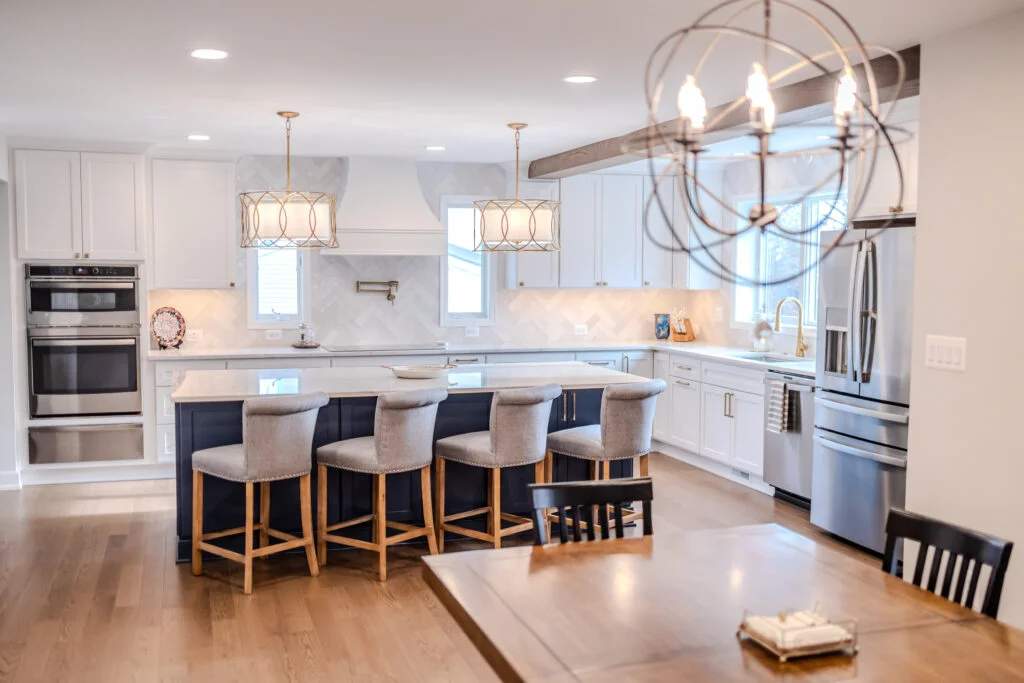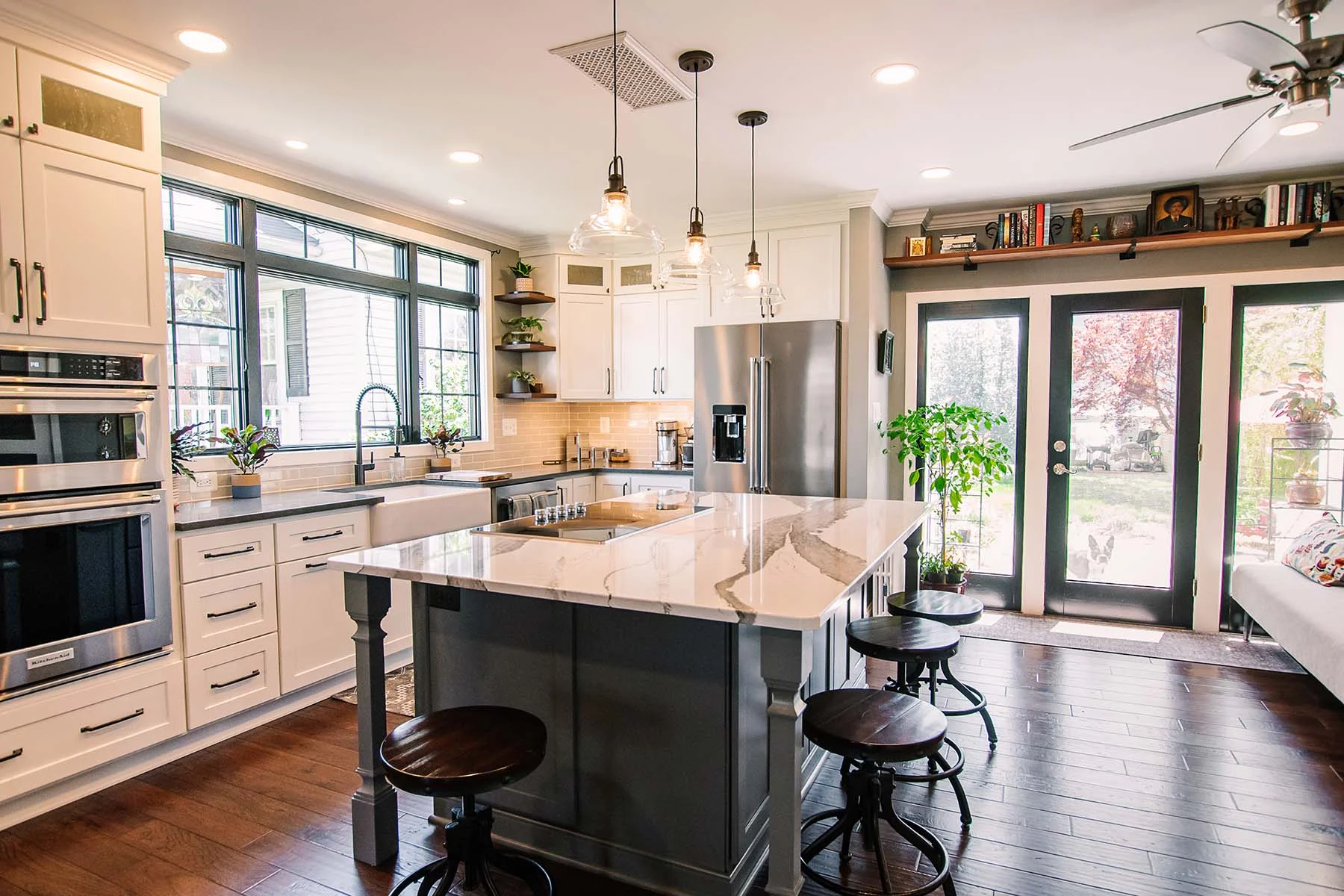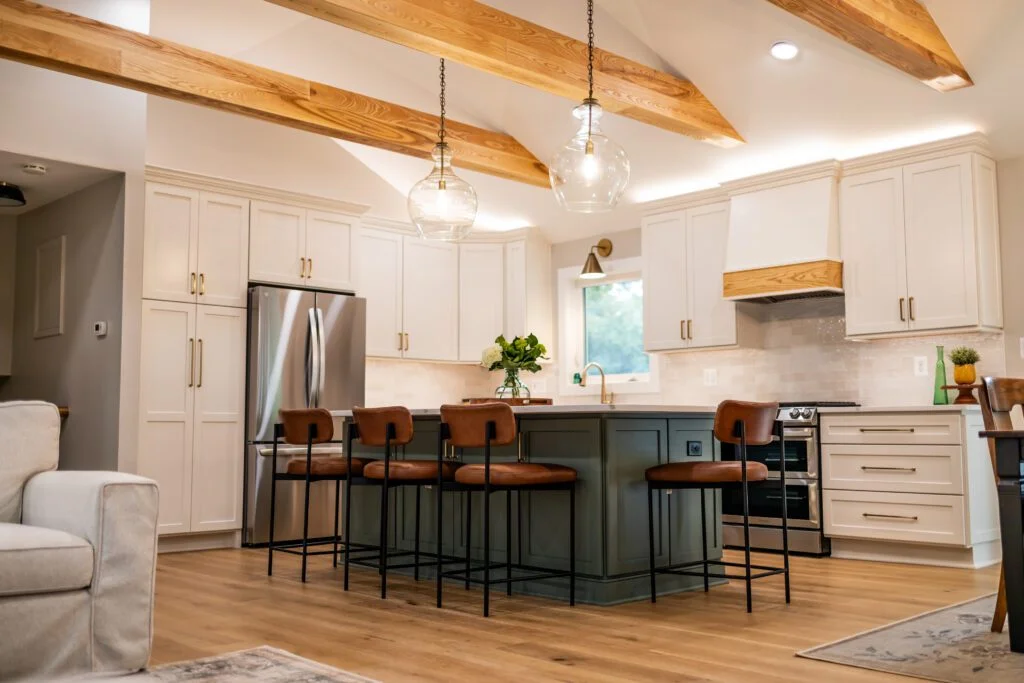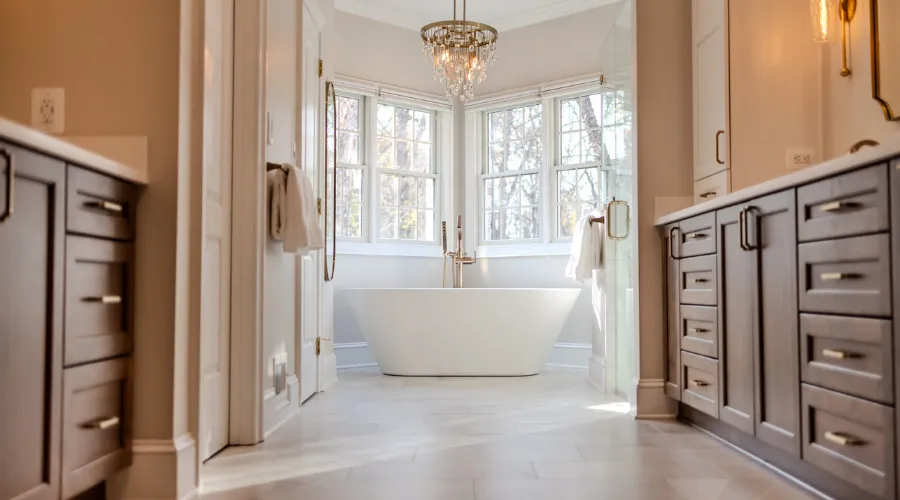
Staying and adding on usually makes sense when you value your location, your lot can support more space, and the existing house is sound enough to build on. Moving usually makes more sense when the lot, the home’s condition, or your long-term plans point somewhere else. Neither answer fits every Maryland household, and the clearest way to decide is to compare both paths against the same set of factors.
Growing households often reach this question after months of working around the same problem: a kitchen that cannot hold everyone, no room for a home office, or a bedroom count that no longer matches the way the family lives. This guide offers a framework for weighing a home addition in Maryland against a move, including the situations where moving may be the better call. It does not assume an addition is the answer.
Key Takeaways
- Start with what is driving the decision. A need for more space and a need for a different neighborhood point to different answers.
- Lot feasibility can settle the question early. Setbacks, existing structures, and local approvals may limit what can be built.
- The condition of the existing home matters. An addition connects to the house you already have, so deferred repairs may become part of the conversation.
- Moving involves more than a purchase price. Selling, buying, timing, and two sets of transaction steps all add friction.
- Both paths disrupt daily life, in different ways and for different lengths of time.
What Makes Staying and Adding On Worth Considering?
Most homeowners who lean toward an addition are protecting something they cannot easily replace. It might be a short commute, a walkable street, proximity to family, a mature yard, or a neighborhood where the neighbors know each other. Those advantages are easy to undervalue until you start looking at what else is available.
An addition also lets you design the new space around your household rather than adapting to someone else’s floor plan. If your priorities are specific, such as a main-level bedroom, a larger kitchen that opens to the family room, or a quiet office away from the noise of daily life, a design built for you may match them more closely than a house that was designed for a stranger.
It helps to write down which of these advantages you would actually miss. If the list is short, the case for staying gets weaker. If the list is long, an addition deserves a serious feasibility look.
Will Your Lot and Home Support an Addition?
This is often the first real gate. Before you spend time on design ideas, it is worth finding out what your property can accommodate. A few questions usually come up early:
- Setbacks and lot coverage. Local zoning commonly limits how close new construction can sit to property lines and how much of the lot can be covered. These rules vary by jurisdiction.
- Existing structures and utilities. Septic systems, wells, easements, and drainage patterns can affect where an addition may go.
- Building up instead of out. If the footprint is limited, a second-story addition may be an option, though it brings its own structural questions.
- Approvals. Most additions require permits and plan review. Our guide to the permit process for home additions in Maryland walks through the typical sequence.
A site visit with a design-build professional can turn these general questions into specific answers for your property. If you are also wondering about design support, Do I Need an Architect for a Home Addition in Maryland? covers that conversation.
How Does the Condition of Your Current Home Affect the Decision?
An addition is built onto your existing house, so the existing house matters. A home with a sound structure and reasonably current systems is generally a stronger candidate than one with significant deferred maintenance.
Consider the roof, foundation, heating and cooling equipment, electrical service, and plumbing. Connecting new space to older systems may prompt questions about capacity or upgrades, and those questions are best raised during planning rather than discovered mid-project. A qualified professional can evaluate what is feasible and what the existing house may need.
If the home needs substantial work throughout, it can be useful to ask whether that investment is better directed at a house that already fits your needs. That is a fair question, and an honest remodeler should be willing to discuss it.
What Does Moving Involve Beyond the Purchase?
Moving is often described as the simpler option, but it carries its own list of steps. You may need to prepare and sell your current home, find and buy a new one, coordinate the timing between the two, and move your household, sometimes more than once.
Each step can bring costs and uncertainty that are hard to see up front. Your lender, a real estate professional, and a tax advisor can help you understand the specifics for your situation. We recommend gathering those perspectives before deciding, since they fall outside what a remodeler can speak to.
A new house also may not solve every problem. It may need updates of its own, and the layout may fit your household only partly. Those updates can turn a move into a move-plus-remodel, so it is worth asking what the new home would still need.
How Do Disruption and Timeline Compare?
An addition means living through construction, or arranging to live elsewhere for part of it. Noise, dust, limited access to parts of the house, and a longer schedule are all realistic expectations. Planning, design, and permitting come before construction begins. Our post on how long a home addition takes in Maryland outlines how those phases fit together.
A move concentrates its disruption into a shorter window but can add its own stress: showings, negotiations, closing dates, and packing. For families with school-age children or specific timing needs, the calendar may influence the decision as much as anything else.
Neither path is painless. The more useful question is which kind of disruption your household can handle best.
How Do the Two Paths Compare Side by Side?
Use this table as a starting point for a conversation with your family and your professionals. The right-hand column suggests a question worth asking for each factor.
| Factor | Staying and Adding On | Moving | Question Worth Asking |
|---|---|---|---|
| Location | Keeps your current neighborhood and routines | Opens up new neighborhoods | Which parts of your location would you miss most? |
| Lot feasibility | Depends on setbacks, utilities, and approvals | Matters less if the new home already fits your needs | Has anyone confirmed what your lot can accommodate? |
| Home condition | New space ties into existing systems | Condition varies by home; inspections help | What would each home still need? |
| Design goals | Space can be designed around your household | You adapt to an existing layout, with possible updates | How closely must the layout match your priorities? |
| Transaction steps | Financing and permits, no sale required | Selling, buying, and timing coordination | Who can walk you through the financial details? |
| Disruption | Construction on site, over a longer period | Packing and relocation over a shorter window | Which kind of disruption fits your household better? |
| Long-term plan | Supports staying put for years | May suit a shorter horizon or a different stage of life | How long do you expect to stay? |
When Might Moving Be the Better Choice?
Moving may be the stronger option when:
- The lot cannot reasonably support the space you need.
- The house needs extensive work in addition to the addition.
- Your priorities center on a different location, school setting, or community.
- Your household expects to relocate within a few years anyway.
- The scope of what you want exceeds what a project on this particular property can deliver.
Recognizing these situations early saves time and money. A trustworthy remodeler will tell you when an addition is not a good fit.
How Can You Test the Decision Before Committing?
A few practical steps can bring clarity without locking you into either path:
- List your must-haves. Separate what you need from what would be nice to have.
- Request a feasibility conversation. Ask a design-build team what your lot and house can support.
- Review cost guidance. Our Investment Guide and cost of a home addition in Maryland article explain what shapes project pricing.
- Talk to your lender and a real estate professional. They can speak to the financial side of both paths.
- See the work. Browse Cornerstone’s Projects to get a feel for what is possible.
Related Resources from Cornerstone Remodeling
For general guidance on building rules in the state, the Maryland Department of Labor publishes an overview of building codes. Local jurisdictions add their own requirements, so confirm details with your county or municipality.
Deciding between an addition and a move is easier with real information about your property. Contact Cornerstone Remodeling or call (410) 336-7011 to talk through what an addition could look like for your home.